
The Hidden Cost of Every Trade: Slippage, Funding, and the Numbers You Don't See on the Chart
I used to think my P&L was entry minus exit. It's not. There's a whole invisible layer eating your account between the click and the close, and most traders never look at it.

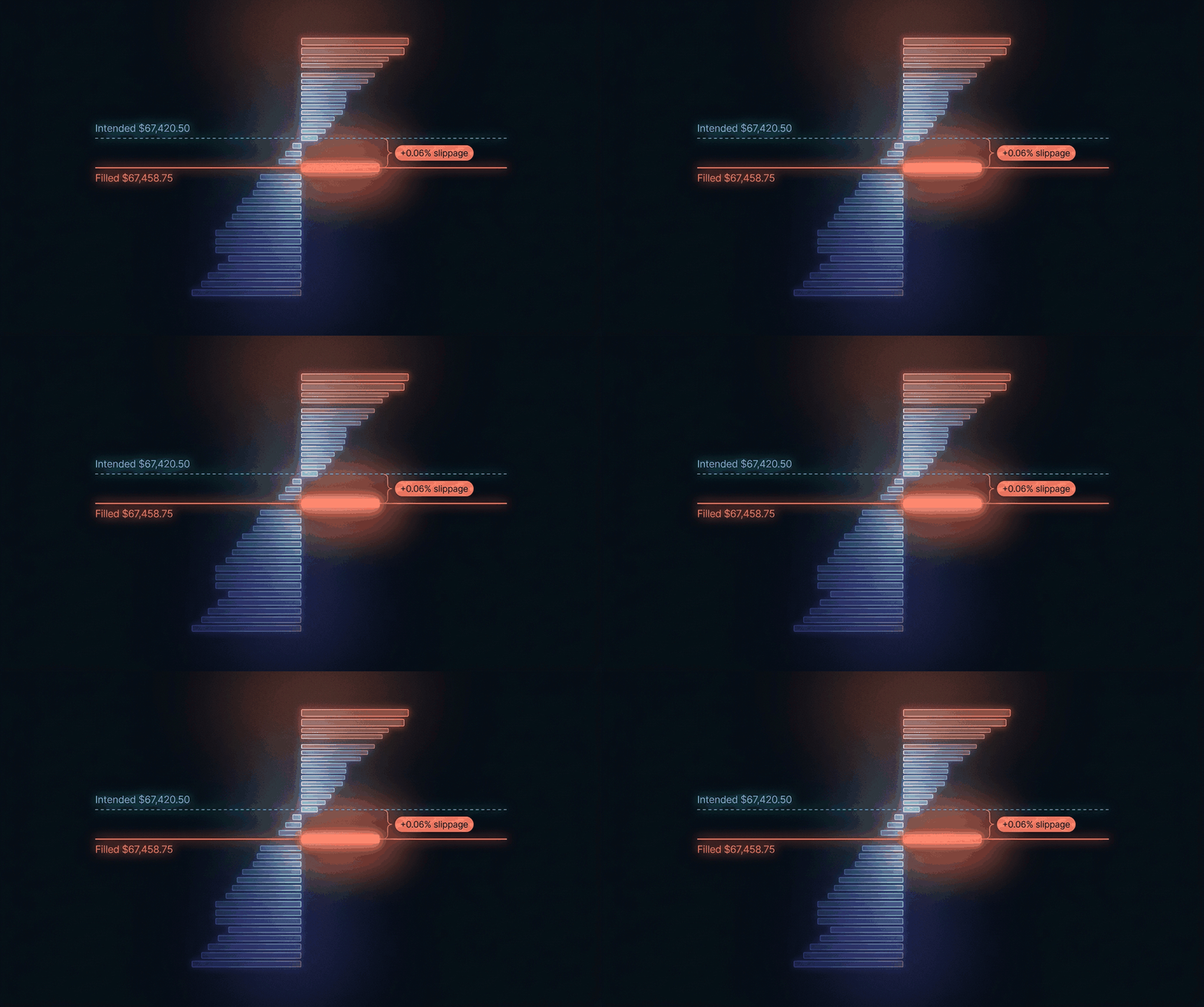
I remember the first time I got filled way off from where I clicked and thought something was broken. Market was moving fast, I hit a market buy on a decent size position, and the fill came back like four ticks above where I saw the price a half second earlier. My first thought was actually "did the exchange just steal from me." Refreshed the page twice. Checked another tab to see if the price was even real. It was real. That's just what happens when you slam a market order into a book that isn't deep enough to absorb it. Nobody stole anything. I paid for speed and didn't know I was paying for it.
That's slippage, and if you've been trading perps for more than a few weeks you've already met it, you just might not have called it by name. It's the gap between the price you saw and the price you got. On a liquid pair in calm conditions it's basically nothing, a rounding error. On a thinner book, or during a fast move, or right when some macro print drops and everyone's market order hits at once, it can be real money. And the thing about slippage is it doesn't show up anywhere obvious. Your position just opens a little worse than you expected and you shrug it off because hey, you're in the trade, that's what matters, right.
Except it adds up. If you're someone who takes a lot of entries, a lot of scalps, in and out, in and out, and you're using market orders every time because limit orders feel too slow, you are quietly bleeding out through a wound you can't see. I've done this. Still catch myself doing it when I'm impatient and just want to be in the trade already. And so you tell yourself the loss was the setup being wrong, when really the setup was fine and you just paid an extra bit on the way in and an extra bit on the way out and that's the difference between the green trade and the red one.
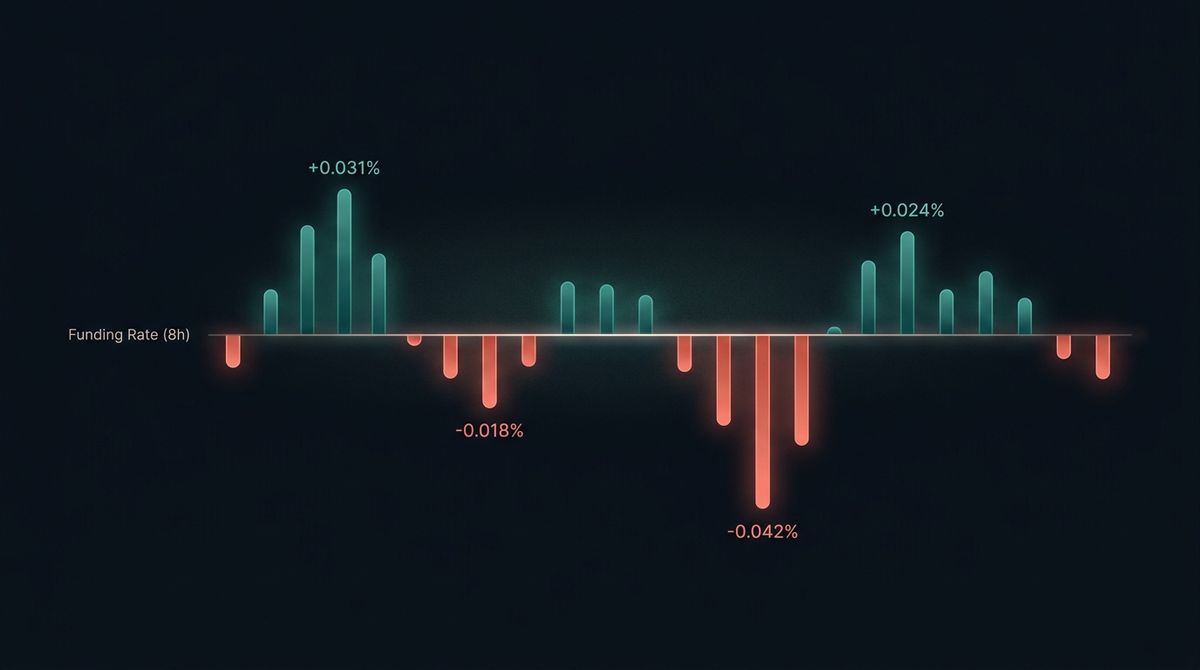
Funding rate is the other one, and honestly this one gets people worse because it's slower and sneakier. Slippage hits you once, at the fill. Funding hits you every few hours, quietly, for as long as you're holding.
Here's the trade that taught me. I had a swing short on, decent conviction, thesis was solid, I was patient with it, didn't touch the stop, actually did the disciplined thing and let it cook for a few days. Price didn't really move much either way. Basically flat. And I close it out expecting to be roughly breakeven and I'm actually down a real amount. Sat there for a second like, what happened. Pulled up the funding history and there it was. I was short into negative funding the entire time, paying longs to hold my position, every eight hours, stacking up while I wasn't even looking. The trade itself did nothing. Funding did the damage.
And so / anyway, what I learned from that is funding isn't a footnote, it's a cost of carry, same as if you were paying interest to hold something. If you're day trading and closing everything out the same day it barely matters, you're rarely even around for a funding payment. But the longer you hold a perp position, the more funding becomes a real input into whether the trade is actually worth it, separate from whether your directional read was right. I've had trades where I was completely correct on direction and still net negative because I ignored what funding was doing to me the entire time I sat in it.
The annoying part is funding flips. It's not fixed. Sentiment shifts, funding shifts with it, and a position that was cheap to hold on day one can become expensive to hold by day three, or the other way around, it can pay you to be patient. I check it now before I hold anything overnight. Not obsessively, just a glance. Am I getting paid to sit here or am I paying to sit here. Changes how long I'm willing to let something breathe.
Slippage and funding together are basically the tax nobody talks about. Trading gets sold to people as "did you call the direction right or not," and yeah that matters a lot, that's most of it. But there's this whole second layer underneath where the mechanics of how you got in, how you got out, and how long you sat there holding, are quietly taking a cut regardless of whether your read was good. Two traders can have the identical thesis, identical entry price on the chart, identical exit price on the chart, and end up with different real results because one of them market ordered into a thin book and held through three funding payments going the wrong way, and the other one was patient with limit orders and picked a moment where funding was in their favor.
I'm not saying become paranoid about it. I'm saying it's worth actually looking at instead of pretending your P&L is just entry minus exit, clean, like a textbook. It's not clean. Nothing about actually being in the market is clean.
Some of this depends on where and how you're trading too. Thinner venues or newer pairs are going to slip you harder on size than something with a deep, well-traded book. Hyperliquid's order book on the majors is usually solid enough that slippage isn't the main issue unless you're sizing way up or trading something illiquid, but I've felt it plenty on lower cap perps where the depth just isn't there and a market order moves the price against you visibly while it's filling. That's less about the exchange being bad and more about liquidity being liquidity, same rule everywhere.
The habit that actually helped me here isn't complicated. Use limit orders when you can afford to wait a second, even a tight one just above or below market, so you're not paying the market maker's spread on top of everything else. And actually look at your fill versus what you intended, don't just glance at "am I in the trade, yes, moving on." I started writing down the intended entry and the actual fill in my notes, not for any deep reason, just so I'd stop lying to myself about how clean my execution actually was. Same with funding, if I'm holding overnight I check it, same way I'd check anything else before deciding to stay in.
That's really it. Not a system, not a rule that needs a spreadsheet. Just paying attention to the part of the trade that happens after you've already decided you're right, because that part costs money too and it doesn't ask your permission.
We built the journal in TechMalak to track fills and P&L the way you actually traded, not the clean textbook version, if that's ever useful to you — open beta right now, still building it with traders who deal with this stuff daily.
Anyway. Next time a trade feels like it should've been green and came out flat or red for no reason you can point to, don't just blame the setup. Go look at what it actually cost you to be in it.